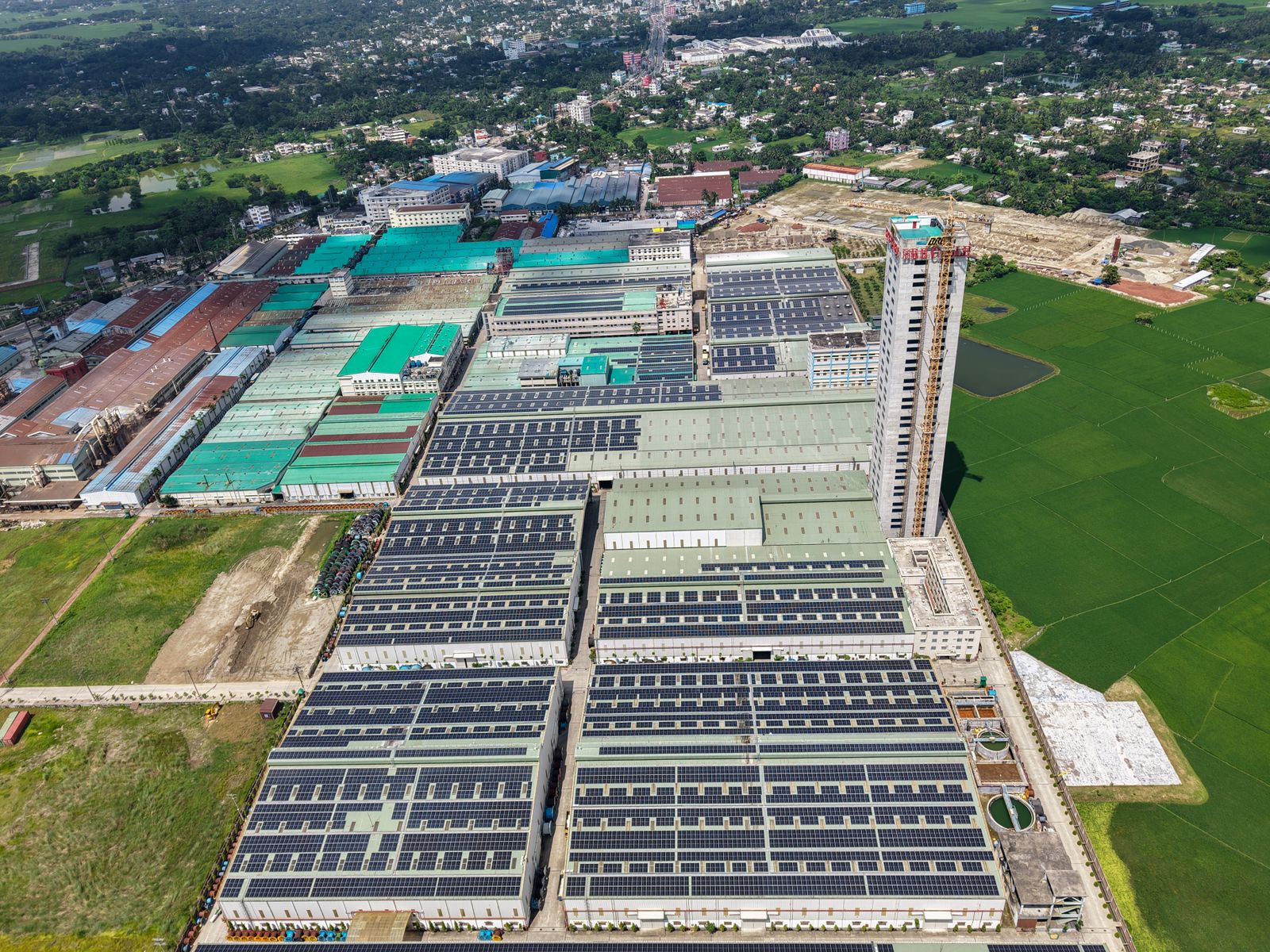
Bangladesh has just put a number on your rooftop; from 1 September 2026 the government will pay Tk 10.50 for every unit of surplus solar electricity you push into the national grid. It sounds like a green revolution in a single line. The truth, once you price the equipment, the battery and the three-year clock, is more complicated; the policy is genuinely useful, but it has been engineered for factories, not for the middle-class family whose photograph will end up in the brochure.
Key takeaways
- The Power Division's 1 September 2026 notification pays Tk 10.50 per unit for surplus rooftop solar, but only for battery-backed systems installed by 28 February 2027, and only for three years to 28 February 2030.
- The tariff is built as Tk 8 generation cost + 20% profit + 11.25% premium = Tk 10.50; the current average retail price is Tk 10.40, so the premium is thin.
- A 5 kW on-grid system (self-use, no battery) costs about Tk 2.6-3.6 lakh; a 10 kW hybrid with a 15-20 kWh LiFePO4 bank costs about Tk 7.5-10.5 lakh in 2026.
- The original op-ed's biggest error: batteries do not die in 4-5 years. Modern LiFePO4 lasts 8-12 years, and 2026 battery prices are roughly half what the draft assumed.
- The realistic winners are garment and industrial rooftops; for households the honest play is a battery-free system that simply cuts the bill.
1. What the policy actually says
Let me start where the confusion starts. The measure is not a fresh law; it is a notification issued by the Power Division of the Ministry of Power, Energy and Mineral Resources on 1 September 2026, taking effect the same day, sitting on top of the Net Metering Guideline 2025. The Business Standard reported the terms the day it landed, and The Daily Star confirmed the mechanics.
The core bargain: if you install a battery-backed rooftop solar system by 28 February 2027 and export your surplus after meeting your own load, the government pays Tk 10.50 per kilowatt-hour for that surplus, for exactly three years, ending 28 February 2030. Systems installed after the February 2027 deadline do not qualify. Payments go to a bank account or a mobile financial service every three months; cash is explicitly ruled out. All equipment must meet BSTI and SREDA standards.
One detail the source op-ed missed and that matters enormously: the premium is not permanent. Once the three years lapse, exports fall back to the ordinary Net Metering Guideline 2025 settlement, where surplus is credited and any leftover balance is settled quarterly at the BERC bulk rate; a much lower number than Tk 10.50. Anyone modelling this as a 25-year income stream is fooling themselves.
2. How Tk 10.50 was built (and why the premium is thin)
Tariff derivation
The arithmetic is honest and it checks out: Tk 8 multiplied by 1.20 multiplied by 1.09375 lands on Tk 10.50. The uncomfortable context, which the notification itself supplies, is that the average retail price of grid electricity is already Tk 10.40 per unit after the June 2026 tariff revision. So the celebrated "premium" for exporting clean power is, against the retail benchmark, about ten poisha. The real value to the owner is not the export premium; it is avoiding the top retail slabs and the Tk 16.06 evening peak by self-consuming.
3. What a system really costs in 2026
Here is where I part company, respectfully, with the Bengali op-ed this analysis builds on. Its equipment logic was sound; several of its 2026 numbers were not. Using live Dhaka market pricing from suppliers such as Solar BD, IPS Bazar and BDStall, here is the corrected picture.
5 kW on-grid system (self-use, no battery)
| Component | 2026 market range (Tk) |
|---|---|
| Mono PERC / N-type TOPCon panels (5,000 W at Tk 21-23/W) | 1,05,000 - 1,15,000 |
| 5 kW hybrid / on-grid inverter (Growatt, Deye, Solis) | 65,000 - 1,19,000 |
| Mounting, DC cable, protection, surge, earthing | 60,000 - 80,000 |
| Installation labour + net metering setup + bi-directional meter | 30,000 - 50,000 |
| Total installed | 2,60,000 - 3,64,000 |
The op-ed's Tk 3.25-3.80 lakh estimate broadly holds; I would place a realistic mid-market figure a touch lower, around Tk 3.0-3.6 lakh, because inverter competition has intensified. The blank the source left in the 5 kW inverter line fills at roughly Tk 65,000 to Tk 1,19,000 depending on brand and single- versus three-phase.
10 kW hybrid system with 15-20 kWh LiFePO4 battery (to export)
| Component | 2026 market range (Tk) |
|---|---|
| 10 kW panels + 10 kW hybrid inverter | 4,50,000 - 5,50,000 |
| 15-20 kWh LiFePO4 bank at Tk 16,000-22,000/kWh (corrected) | 2,40,000 - 4,40,000 |
| Structure, cabling, extra installation | 1,00,000 - 1,50,000 |
| Total installed | 7,90,000 - 11,40,000 |
The op-ed's Tk 8-10 lakh headline survives at the system level, but its battery sub-figure of Tk 35,000-45,000 per kWh was roughly double the real 2026 retail price; 48V rack packs now sell nearer Tk 16,000-22,000 per kWh. That single correction changes the whole cash-flow story, as the calculator below shows.
Cost breakdown: 5 kW on-grid vs 10 kW hybrid
4. The battery question, corrected
The original op-ed's most consequential claim was that industrial-grade lithium batteries survive only 4-5 years in Bangladesh's heat and must then be fully replaced. That is lead-acid thinking applied to a different chemistry. The evidence on LiFePO4 (lithium iron phosphate) is clear: cells are typically rated for 3,000 to 6,000 cycles and deliver roughly 8 to 12 years of service. Heat does matter; NREL field data and industry testing show every 10°C above 25°C accelerates ageing, and hot climates can shave 15-30% off cycle life. So a fair Bangladesh replacement horizon is year 8 to 10, not year 4 to 5.
Why does this matter? Because the op-ed used the 4-5 year figure to argue the model can never recover capital. Push the replacement out to year 9 and halve the battery price, and the picture is not rosy, but it is no longer a guaranteed trap. It is a marginal investment that lives or dies on self-consumption savings, not on the export premium.
2027-2032 cash flow: income and savings vs battery replacement
5. Interactive payback calculator
Change any figure below; every result updates live. The defaults are the verified 2026 figures for a 10 kW hybrid export system. This is a planning tool, not a quotation.
Rooftop solar payback calculator (2026)
Note: the Tk 8.89 post-2030 default is an illustrative assumption based on a DESCO bulk-plus-wheeling reference; the notification itself does not fix a post-premium figure. Adjust it to test your own scenario.
6. Who can realistically participate
Household rooftop vs industrial rooftop
The op-ed's central social point is correct and worth stating plainly: a family that struggles with a Tk 4,000 monthly bill cannot easily find Tk 8-10 lakh for a battery-backed export system, and Bangladesh's banks generally will not lend against rooftop hardware as collateral. IEEFA has documented that lenders demand land or personal guarantees and are unaccustomed to appraising rooftop cash flows. Low-cost green windows exist, Bangladesh Bank's green refinance at 5-6% and IDCOL at 6%, but in practice they reach industrial borrowers, not homeowners.
So who benefits? Bangladesh's ready-made garment and industrial groups. They have the capital, acres of roof, and, crucially, a far stronger incentive than the export premium; with industrial peak tariffs at Tk 16.06 per unit from 6-9pm, storing cheap daytime solar to dodge the evening peak is compelling on its own. The Business Standard has reported factories already meeting 15-60% of demand from rooftop solar. That is the real market. The household "solar revolution" framing is, as the source argued, largely aspirational.
7. The grid and reverse power flow
How reverse power flow stresses an old distribution network
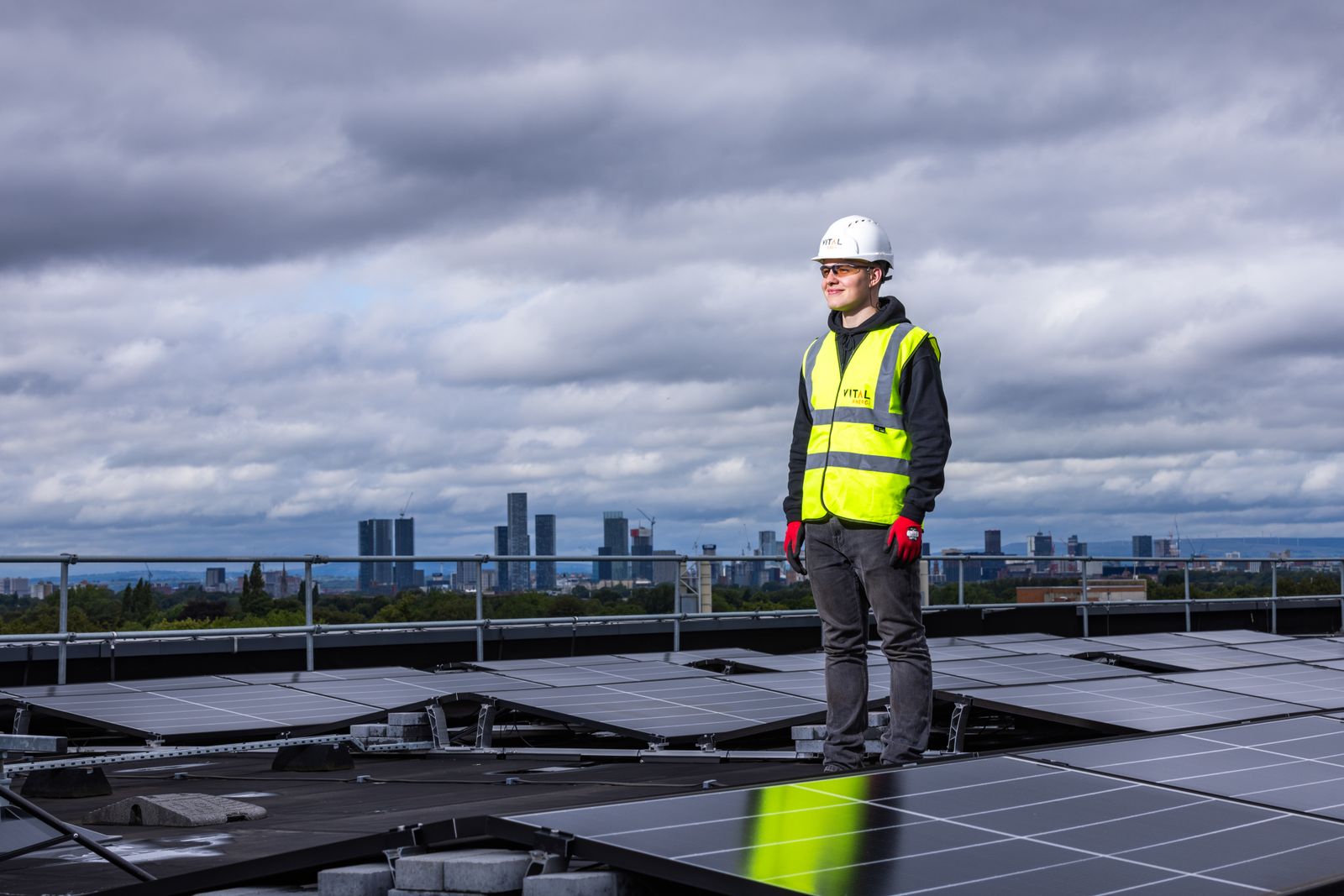
The op-ed's strongest technical argument is that Bangladesh's distribution network was designed for one-way flow, and that thousands of small, variable sources feeding in at midday can push voltage up, stress transformers and trip protection. This is a legitimate, well-documented risk. Analysts at IEEFA and commentators in The Daily Star and New Age have all warned that Bangladesh must not repeat Pakistan's storage-less rooftop surge, which strained its grid and forced an emergency battery build-out. Bangladesh's evening demand peaks around 9pm, hours after solar fades, which is precisely why the notification insists on batteries.
Two caveats keep this in proportion. First, the current base is tiny; net metering delivered roughly 116 MW from 2,657 systems at the last published count, against 32,458 MW of installed capacity. We are nowhere near a grid emergency. Second, the fix is known and incremental: hosting-capacity studies, transformer monitoring, and smart inverters that ride through disturbances. The threat is not solar; it is unmanaged solar.
8. The case for the policy (a fair hearing)
Why this notification is defensible. Bangladesh imports most of its primary energy; August 2026 saw peak shortfalls near 4,000 MW and gas-starved plants like Ghorashal sitting idle. Every rooftop unit is a unit not generated from imported LNG or furnace oil, and it is generated at the point of use, cutting line losses. The insistence on batteries, though expensive, is exactly the discipline Pakistan lacked. The quarterly bank/MFS payment closes off the corruption risk of cash settlements. And the three-year window, cynical as it looks, is a deliberate nudge to trigger installations now, while the fuel crisis is acute, rather than an open-ended subsidy the treasury cannot afford. Judged as a demand-side emergency measure aimed at industry, it is coherent.
9. What would make it work
The framework is salvageable. Six changes would turn a factory perk into a genuinely broad programme.
- Add a battery-optional household tier. Let homes export daytime surplus at a modest premium without a mandatory battery. Most household value is in bill reduction anyway; forcing a Tk 3 lakh battery onto a family is what makes the policy elitist.
- Fix the NBR-Power Division contradiction. The FY2026-27 waiver means little if HS-code disputes keep effective duty on inverters near 38% and on lithium batteries near 62-64%. Align the SRO so households and SMEs, not only RESCOs with PPAs, actually get the exemption.
- Make green finance reach households. Pre-approve Bangladesh Bank refinance for standard residential systems and let the panels and inverter serve as partial collateral, removing the land-guarantee barrier.
- Fund distribution transformer upgrades and monitoring ahead of the surge, with published hosting-capacity maps so installers know where the grid can absorb export.
- Introduce time-of-use export windows. Pay the highest rate for power delivered into the 6-9pm peak from batteries; that is when the grid genuinely needs it and it rewards storage honestly.
- Extend the premium period or taper it. A hard three-year cliff in February 2030 discourages exactly the careful, bankable investment the country wants. A five-year window with a gentle taper would improve payback certainty.
Conclusion
The Tk 10.50 notification is neither the revolution its supporters claim nor the pure trap its critics fear. Priced with real 2026 numbers, it is a targeted, time-boxed instrument that works well for industrial rooftops and works poorly for the middle-class family it is marketed to. The battery mandate is wise engineering but bad economics for households; the premium over retail is razor-thin; and the three-year clock means the money must be made fast. Fix the household tier, the customs contradiction and the financing gap, and Bangladesh could convert a factory subsidy into a national programme. Leave them unfixed, and the rooftops that fill up will belong to those who never needed the encouragement.
Related reading on this site: Bangladesh FY2027 budget analysis: what it means for solar and Bangladesh's EV and green economy: the next decade.
Frequently asked questions
How much does Bangladesh pay for rooftop solar sent to the grid in 2026?
Under the Power Division notification dated 1 September 2026, battery-backed rooftop systems installed by 28 February 2027 earn Tk 10.50 per unit for surplus electricity exported to the grid, for three years until 28 February 2030. Payment is made quarterly to a bank or mobile financial service account.
How is the Tk 10.50 per unit tariff calculated?
The government capped the battery-inclusive generation cost at Tk 8 per unit, then added a 20 percent profit margin and an 11.25 percent premium, which produces Tk 10.50 per unit. Consumers who build systems cheaper than Tk 8 per unit keep the saving.
What does a rooftop solar system cost in Bangladesh in 2026?
A 5 kW on-grid system without a battery typically costs about Tk 2.6 to 3.6 lakh. A 10 kW hybrid system with a 15 to 20 kWh LiFePO4 battery bank typically costs about Tk 7.5 to 10.5 lakh installed.
How long do LiFePO4 solar batteries last in Bangladesh?
Quality LiFePO4 batteries are rated for 3,000 to 6,000 cycles and last roughly 8 to 12 years. Bangladesh's heat can reduce cycle life by 15 to 30 percent, so a realistic replacement horizon is year 8 to 10, not the 4 to 5 years often quoted for lead-acid batteries.
What happens to the price after 28 February 2030?
The special Tk 10.50 premium ends. Surplus exports then settle under the standard Net Metering Guideline 2025 rules, which credit exports and settle any leftover balance quarterly at the BERC bulk rate, a materially lower figure than the premium.
Can a middle-class household realistically benefit?
A household can profitably install a 5 kW on-grid system to cut its own bill. The battery-backed export model that unlocks the full Tk 10.50 premium needs Tk 7.5 to 10.5 lakh upfront, which favours industrial and commercial rooftops with capital and large roof areas.
Is financing available for rooftop solar in Bangladesh?
Yes. Bangladesh Bank's green refinance scheme lends at 5 to 6 percent depending on tenor and IDCOL finances rooftop solar at 6 percent, though these windows are limited and mostly reach industrial borrowers rather than households.
Are solar panels and batteries duty-free in Bangladesh?
The FY2026-27 budget waived duties on core solar equipment until 2031, but a June 2026 NBR order narrowed the benefit and HS-code disputes have kept the effective burden on inverters near 38 percent and on lithium batteries near 62 to 64 percent of value in some cases.
Optional acknowledgement (keep or delete): This analysis engages with, verifies and updates the arguments of a Bengali op-ed by Abu Naeem on the Tk 10.50 rooftop solar incentive. All figures here have been independently checked against 2026 sources.